Raghav Sehgal, PhD
Faculty and Principal Investigator at the Marcus Institute of Aging Research, a Harvard Medical School affiliate.
I develop AI and biomarkers to understand how we age, and measure whether interventions change that trajectory.

Nature Medicine2026 first-author study of 51 longevity interventions
Nature Aging2025 first-author paper introducing Systems Age
Aging Cell2026 first-author study of epigenetic clock reliability
1,800+ citationsh-index 15, Google Scholar, October 2026





About
I came to aging research from data science. Before graduate school I was the founding data scientist and lead product manager at Elucidata, where I built Polly, a platform for AI-assisted drug discovery, and I spent a year in a wet lab.
I arrived at Yale in 2019 intending to apply computation to cancer. A question from my adviser, about targeting aging itself, changed that. Over seven years at Yale I moved from postgraduate researcher to PhD student to faculty, training first in Morgan Levine’s lab at Yale and Altos Labs (2020 to 2023) and then in Albert Higgins-Chen’s lab (2023 to 2026). That work produced Systems Age (Nature Aging, 2025), the TranslAGE framework, a study of clock reliability (Aging Cell, 2026) and the analysis of 51 longevity interventions (Nature Medicine, 2026).
In 2026 I joined the Marcus Institute of Aging Research, a Harvard Medical School affiliate, as faculty and Principal Investigator. My lab focuses on computational geroscience.
Research philosophy
Measurement comes before intervention. If we cannot measure aging reliably, we cannot tell whether a therapy works. I aim to close the loop between measurement, discovery and intervention, and to take tools out of the lab when the evidence supports it, while being clear about what a biomarker can and cannot show.
Next
Causal drivers of aging, new therapeutic targets, and biomarker standards that trials and clinicians can rely on.

Current roles
Academic
- Faculty and Principal Investigator, Marcus Institute of Aging Research, a Harvard Medical School affiliate2026–
Advisory, industry and community
- Cofounder and Chief Scientific Officer, Undun Longevity2026–
- Chief Scientific Officer, Inexion2026–
- Head of Research, Longevity Global2026–
- Scientific Advisory Board, TruDiagnostic2024–
- Scientific Principal, LongevityTech.Fund2024–
- Host, Decoding Longevity podcast
- Angel investor: Asima Health, NaNotics, ResXiv
- Director of Bioinformatics, Healthy Longevity ClinicPrior
- Scientific and Bioinformatics Consultant, Cambrian BioPharma2022–2023
Advisory and commercial roles are separate from my academic appointment. Disclosures available on request.
Selected honors and funding
- 2025Forbes 30 Under 30, Healthcare
- 2025Foresight Fellowship
- 2025IIIT-Delhi Young Alumni Award
- 2024Best Speaker and Best Poster, Biomarkers of Aging Conference
- 2024Top of the Biomarkers of Aging Challenge leaderboard (CpGPT)
- 2021Impetus Grant
- 2020Gruber Science Fellowship, Yale
- OtherAFAR grant; XPRIZE Longevity award; NIA Aging Biomarker Network pilot award; Yale T32 fellowship; NIH Early Stage Investigator
Funding and fellowships







From lab to clinic
Roles and disclosures- Research, 2023 to 2025Systems Age developed at Yale
Preprint in 2023, published in Nature Aging in 2025.
- Commercial application, 2024Patented and licensed
Licensed to TruDiagnostic, which offers it as SYMPHONYAge.
- Industry use, 2026Used in pharmaceutical research
Eli Lilly researchers presented tirzepatide trial analyses using SYMPHONYAge at ARDD 2026.







Advisory, commercial and investment roles are separate from my academic appointment.
Three contributions
How they fit togetherSystems Age
A DNA methylation biomarker that estimates aging across 11 biological systems from a single blood draw. Published in Nature Aging (2025). Patented and licensed to TruDiagnostic, which offers it as SYMPHONYAge.
Published Commercial application Nature Aging
TranslAGE
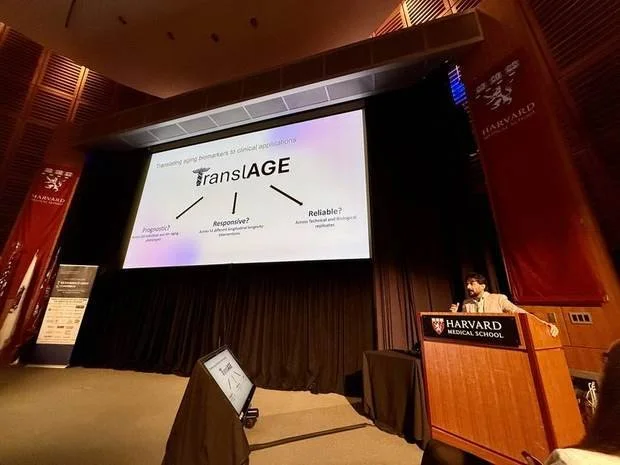
A framework that evaluates aging biomarkers on three criteria: whether they predict outcomes, whether they change with interventions, and whether they are reliable on repeat measurement. Its findings appear in Nature Medicine (2026) and Aging Cell (2026); the platform itself is a preprint.
Published findings Platform preprint translage.io
CpGPT
A transformer foundation model for DNA methylation, developed with collaborators, that adapts to tasks such as age and mortality prediction. It reached the top of the Biomarkers of Aging Challenge leaderboard.
Preprint bioRxiv
Why one number is not enough
Two people can share a chronological age, and even a single “biological age”, while their body systems age at different paces. Measuring systems separately can show where aging is concentrated, and whether an intervention reaches the system it was meant to.
Conceptual illustration. Positions are drawn for explanation only and do not represent measured data from any person.
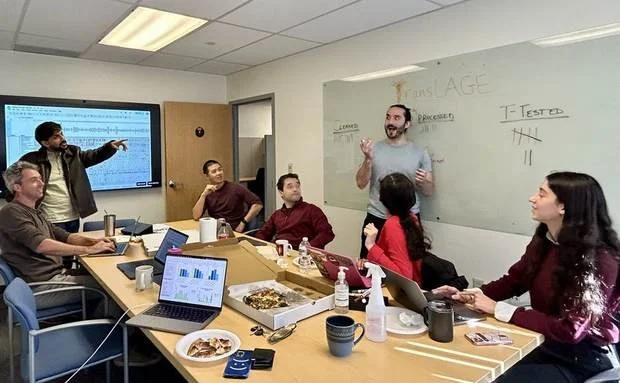
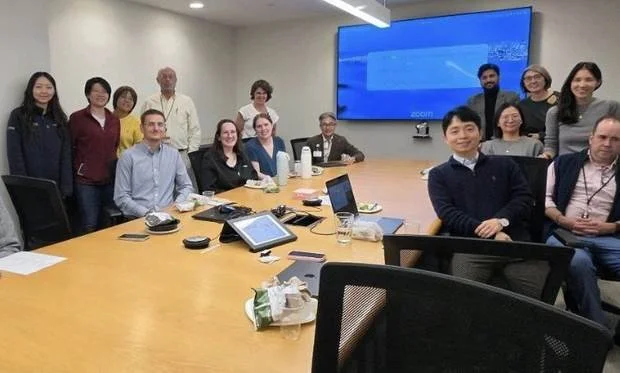
The labs behind the work
My scientific journey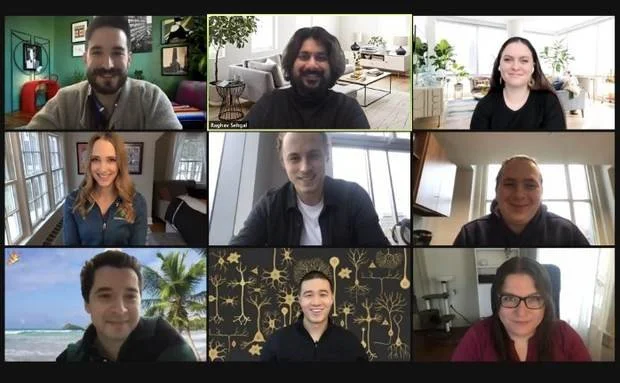
Current research agenda
Read the full programMeasure aging across systems
Biomarkers that resolve aging by biological system, using epigenetic, proteomic and functional data.
Test whether biomarkers can be trusted
Reliability and responsiveness standards, so trials can tell a real change from noise.
Use AI to reveal aging biology
Foundation models and causal methods to find drivers of aging and candidate targets.
Selected publications
All publications- 2026
Responsiveness of epigenetic aging biomarkers to longevity interventions in humans
Nature Medicine · first author Published
- 2026
Aging Cell 25(8), e70635 · first author Published
- 2025
Nature Aging 5, 1880–1896 · first author Published
- 2024
CpGPT: a foundation model for DNA methylation
bioRxiv · co-author Preprint
Recognition

- 2025Forbes 30 Under 30, Healthcare
- 2025Foresight Fellowship
- 2024Best Speaker and Best Poster, Biomarkers of Aging Conference
- 2020Gruber Science Fellowship, Yale
Research
My program asks three connected questions. Together they move from measuring aging, to knowing when a measurement can be trusted, to understanding the biology behind it. I combine machine learning, deep learning, multi-omics and clinical data, and I work with clinicians, cohort studies and industry partners.
How can we measure aging across different biological systems?
- Approach
- Train models on DNA methylation and other molecular data against system-specific clinical measures, so each score reflects aging in one physiological system rather than the body as a whole.
- Key contributions
- Systems Age, 11 system-specific scores from a single blood draw. Nature Aging, 2025 Preprint 2023
- Licensed to TruDiagnostic and offered as SYMPHONYAge. Eli Lilly researchers presented tirzepatide trial analyses using SYMPHONYAge at the 2026 Aging Research and Drug Discovery meeting. Commercial application
- OMICmAge, which estimates biological age by combining multi-omics with electronic medical records. Nature Aging, 2026 Co-author
- Organ-specific biological aging in a randomized trial of caloric restriction. Clinical Nutrition, 2026 Co-author
- System-specific aging in schizophrenia, a meta-analysis. Preprint
- Proteomic and functional aging biomarkers, including the reliability of proteomic clocks. Ongoing
- Why it matters
- A single biological-age number can hide where aging is happening. System-level measures can point to risk in a specific system and help match interventions to the systems they affect. A change in these scores is a biomarker result; on its own it does not show clinical benefit or longer life.
Technical detail
Systems Age uses a five-step pipeline that mixes supervised and unsupervised machine learning to find latent dimensions of system-specific aging, modelling 11 system scores from about 450,000 methylation features and 20,000 samples. The scores can also group people into “ageotypes” with different predispositions to age-related conditions.
How can we establish whether aging biomarkers are reliable and responsive to interventions?
- Approach
- Assemble public and partner datasets into common benchmarks, then score each biomarker on prognostic validity, responsiveness to interventions, and technical and biological reliability.
- Key contributions
- Responsiveness of epigenetic aging biomarkers to longevity interventions in humans, an analysis of 51 intervention studies and 110 biomarkers. Nature Medicine, 2026
- TranslAGE, a platform for systematic validation of epigenetic aging biomarkers. Preprint 2025 translage.io
- methylCIPHER, an open-source R package for calculating published epigenetic clocks, maintained by the Levine and Higgins-Chen labs. GitHub
- Biological versus technical reliability of epigenetic clocks and what it means for prognosis and intervention response. Aging Cell, 2026
- DNA methylation signatures of cellular senescence are not reversed by senolytic treatment. Aging Cell, 2026 Co-author
- How time of day and sleep affect the reliability of aging biomarkers. Ongoing
- Why it matters
- Trials of interventions on aging need endpoints that move when biology changes and stay still when it does not. Without that evidence, a biomarker change cannot be interpreted.
Technical detail
The intervention analysis compiled 51 human intervention studies and assessed how 110 DNA methylation biomarkers changed in each. The reliability study, published in Aging Cell, separates technical from biological variation in epigenetic clocks and relates both to disease prognosis and intervention response.
How can AI reveal the biology underlying aging?
- Approach
- Build foundation models that learn general structure in molecular data, then probe them for genes, pathways and cell states linked to aging, and prioritize candidates for experiments and trials.
- Key contributions
- CpGPT, a foundation model for DNA methylation, developed with collaborators. Preprint 2024
- CpG Atlas, a multi-layer DNA methylation database with an AI interface. Preprint 2026
- A single-cell transcriptomic aging clock built with large language models to suggest targets that slow cellular aging. Conference abstract 2025
- Multi-omic analysis of APOE4 in Alzheimer’s disease. Preprint
- Why it matters
- Measurement shows that aging changes; understanding shows why. Models that link molecular patterns to biology can help choose which interventions are worth testing.
Technical detail
CpGPT is a transformer pretrained on large collections of DNA methylation profiles, then adapted to downstream tasks such as imputation and age or mortality prediction. CpG Atlas pairs a multi-layer methylation database with an AI interface for researchers.
Publications and resources
Selected papers with short explanations, then all work by theme and by year. Preprints, conference abstracts and ongoing work are labelled.
Google ScholarGitHubmethylCIPHER (clock calculations)CpG AtlasTranslAGE platform
Featured papers
- 2026
Responsiveness of epigenetic aging biomarkers to longevity interventions in humans
Nature Medicine · first author Published
Problem: many therapies claim to slow aging, but there was no systematic test of which aging biomarkers respond to them in humans. Finding: across 51 intervention studies and 110 biomarkers, diet with exercise, metformin and semaglutide were associated with slower epigenetic aging, while most supplements showed little effect. Why it matters: it gives trials an evidence base for choosing endpoints. A biomarker change alone does not establish clinical benefit.
- 2026
Aging Cell 25(8), e70635 · first author Published
Problem: a clock that gives different answers on repeat testing can mislead a trial. Finding: technical and biological sources of variation in epigenetic clocks can be separated, and they relate differently to disease prognosis and intervention response. Why it matters: it shows which clocks can be trusted to detect real change.
- 2025
Nature Aging 5, 1880–1896 · first author Published
Problem: one biological-age number hides differences between body systems. Finding: 11 system-specific scores can be estimated from one blood methylation profile, and they relate to disease in the matching system. Why it matters: aging can be tracked system by system. Patented and licensed to TruDiagnostic as SYMPHONYAge.
- 2024
CpGPT: a foundation model for DNA methylation
bioRxiv · co-author Preprint
Problem: methylation models are usually built task by task. Finding: a foundation model pretrained on methylation data adapts to many tasks and reached the top of the Biomarkers of Aging Challenge leaderboard. Why it matters: one model can support many aging analyses.
By research theme
Measuring system-specific aging
- 2026
OMICmAge quantifies biological age by integrating multi-omics with electronic medical records
Nature Aging 6, 722–737 · co-author Published
- 2026
Effect of caloric restriction on organ-specific biological aging in a randomized clinical trial
Clinical Nutrition · co-author Published
- 2025
Nature Aging 5, 1880–1896 · first author Published
- 2025
Research briefing on Systems Age, with Morgan Levine
Nature Aging 5, 1665–1666 Published
- 2025
Early life stress shapes how obesity measures predict epigenetic aging and metabolic health
Journal of the Academy of Consultation-Liaison Psychiatry 66, S5 Conference abstract
- 2024
- 2024
Geroscience-centric perspective for geriatric psychiatry: integrating aging biology with geriatric mental health research
American Journal of Geriatric Psychiatry 32(1), 1–16 · co-author Published
- 2022
System specific aging scores: a state of the art aging clock built using aging scores from different bodily functions
Innovation in Aging 6 Conference abstract
- 2021
Deep learning methods capture non-linear brain aging patterns underlying Alzheimer’s disease and resilience
Innovation in Aging 5 Conference abstract
- 2021
Systems aging clock: a novel epigenetic aging clock modeled from organ and bodily function based mortality indices
Innovation in Aging 5 Conference abstract
AI and the biology of aging
- 2026
CpG Atlas: a centralized multi-layer database and AI interface for DNA methylation research
bioRxiv · co-author Preprint
- 2025
Beyond the genotype: a multi-omic analysis of APOE ε4’s role in Alzheimer’s disease
bioRxiv · co-author Preprint
- 2025
Innovation in Aging 9, Supplement 2 Conference abstract
- 2024
CpGPT: a foundation model for DNA methylation
bioRxiv · co-author Preprint
- 2023
More than bad luck: cancer and aging are linked to replication-driven changes to the epigenome
Science Advances 9(29), eadf4163 · co-author Published
Reliability and responsiveness of biomarkers
- 2026
Responsiveness of epigenetic aging biomarkers to longevity interventions in humans
Nature Medicine · first author Published
- 2026
Aging Cell 25(8), e70635 · first author Published
- 2026
DNA methylation signatures of cellular senescence are not reversed by senolytic treatment
Aging Cell 25(3), e70430 · co-author Published
- 2026
Biological Psychiatry 99(10) supplement Conference abstract
- 2025
Invigorating discovery and clinical translation of aging biomarkers
Nature Aging 5, 539–543 · consortium co-author Published
- 2025
TranslAGE: a comprehensive platform for systematic validation of epigenetic aging biomarkers
bioRxiv · co-author Preprint
- 2025
Translational Psychiatry 15, 452 · co-author Published
- 2025
Innovation in Aging 9, Supplement 2 Conference abstract
- 2025
Translating geroscience to clinic: using ML for insightful and responsive aging biomarkers
PhD dissertation, Yale University Published
- 2024
DNAm aging biomarkers are responsive: insights from 51 longevity interventional studies in humans
bioRxiv · first author (published 2026 in Nature Medicine) Preprint
- 2024
When to trust epigenetic clocks: avoiding false positives in aging interventions
bioRxiv · co-author Preprint
- 2024
Ketamine treatment effects on DNA methylation and epigenetic biomarkers of aging
medRxiv · co-author Preprint
- 2021
Aging biomarkers for clinical trials and drug discovery
Innovation in Aging 5 Conference abstract
Earlier work: metabolism, cancer and data science
- 2022
Pyruvate kinase M1 suppresses development and progression of prostate adenocarcinoma
Cancer Research 82(13) · co-author Published
- 2022
Comprehensive analysis of metabolic isozyme targets in cancer
Cancer Research 82(9) · co-author Published
- 2022
Targeting acetyl-CoA carboxylase in pre-clinical breast cancer models
Cancer Research 82(4) supplement Conference abstract
- 2020
Multi-tissue acceleration of the mitochondrial phosphoenolpyruvate cycle improves whole-body metabolic health
Cell Metabolism 32(5) · co-author Published
- 2020
[1,2-13C2]-L-glutamine mass isotopomers map hepatic mitochondrial metabolism without tracer interference
Diabetes 69, Supplement 1 Conference abstract
- 2019
El-MAVEN: a fast, robust, and user-friendly mass spectrometry data processing engine for metabolomics
Methods in Molecular Biology 1978 (High-Throughput Metabolomics) · co-author Published
- 2019
O-GlcNAc signaling orchestrates metabolic adaptation to prolonged fasting
The FASEB Journal 33, S1 Conference abstract
- 2018
Electrophilic properties of itaconate and derivatives regulate the IκBζ–ATF3 inflammatory axis
Nature 556, 501–504 · co-author Published
- 2017
Prediction of overall survival for patients with metastatic castration-resistant prostate cancer: a crowdsourced challenge with open clinical trial data
The Lancet Oncology 18(1), 132–142 · challenge consortium Published
- 2017
A DREAM challenge to build prediction models for short-term discontinuation of docetaxel in metastatic castration-resistant prostate cancer
JCO Clinical Cancer Informatics 1 · challenge consortium Published
Complete list
- 2026
Responsiveness of epigenetic aging biomarkers to longevity interventions in humans
Nature Medicine · first author Published
- 2026
Aging Cell 25(8), e70635 · first author Published
- 2026
OMICmAge quantifies biological age by integrating multi-omics with electronic medical records
Nature Aging 6, 722–737 · co-author Published
- 2026
DNA methylation signatures of cellular senescence are not reversed by senolytic treatment
Aging Cell 25(3), e70430 · co-author Published
- 2026
Effect of caloric restriction on organ-specific biological aging in a randomized clinical trial
Clinical Nutrition · co-author Published
- 2026
CpG Atlas: a centralized multi-layer database and AI interface for DNA methylation research
bioRxiv · co-author Preprint
- 2026
Biological Psychiatry 99(10) supplement Conference abstract
- 2025
Nature Aging 5, 1880–1896 · first author Published
- 2025
Research briefing on Systems Age, with Morgan Levine
Nature Aging 5, 1665–1666 Published
- 2025
Invigorating discovery and clinical translation of aging biomarkers
Nature Aging 5, 539–543 · consortium co-author Published
- 2025
TranslAGE: a comprehensive platform for systematic validation of epigenetic aging biomarkers
bioRxiv · co-author Preprint
- 2025
Translational Psychiatry 15, 452 · co-author Published
- 2025
Beyond the genotype: a multi-omic analysis of APOE ε4’s role in Alzheimer’s disease
bioRxiv · co-author Preprint
- 2025
Innovation in Aging 9, Supplement 2 Conference abstract
- 2025
Innovation in Aging 9, Supplement 2 Conference abstract
- 2025
Early life stress shapes how obesity measures predict epigenetic aging and metabolic health
Journal of the Academy of Consultation-Liaison Psychiatry 66, S5 Conference abstract
- 2025
Translating geroscience to clinic: using ML for insightful and responsive aging biomarkers
PhD dissertation, Yale University Published
- 2024
CpGPT: a foundation model for DNA methylation
bioRxiv · co-author Preprint
- 2024
DNAm aging biomarkers are responsive: insights from 51 longevity interventional studies in humans
bioRxiv · first author (published 2026 in Nature Medicine) Preprint
- 2024
When to trust epigenetic clocks: avoiding false positives in aging interventions
bioRxiv · co-author Preprint
- 2024
- 2024
Ketamine treatment effects on DNA methylation and epigenetic biomarkers of aging
medRxiv · co-author Preprint
- 2024
Geroscience-centric perspective for geriatric psychiatry: integrating aging biology with geriatric mental health research
American Journal of Geriatric Psychiatry 32(1), 1–16 · co-author Published
- 2023
More than bad luck: cancer and aging are linked to replication-driven changes to the epigenome
Science Advances 9(29), eadf4163 · co-author Published
- 2022
System specific aging scores: a state of the art aging clock built using aging scores from different bodily functions
Innovation in Aging 6 Conference abstract
- 2022
Pyruvate kinase M1 suppresses development and progression of prostate adenocarcinoma
Cancer Research 82(13) · co-author Published
- 2022
Comprehensive analysis of metabolic isozyme targets in cancer
Cancer Research 82(9) · co-author Published
- 2022
Targeting acetyl-CoA carboxylase in pre-clinical breast cancer models
Cancer Research 82(4) supplement Conference abstract
- 2021
Aging biomarkers for clinical trials and drug discovery
Innovation in Aging 5 Conference abstract
- 2021
Deep learning methods capture non-linear brain aging patterns underlying Alzheimer’s disease and resilience
Innovation in Aging 5 Conference abstract
- 2021
Systems aging clock: a novel epigenetic aging clock modeled from organ and bodily function based mortality indices
Innovation in Aging 5 Conference abstract
- 2020
Multi-tissue acceleration of the mitochondrial phosphoenolpyruvate cycle improves whole-body metabolic health
Cell Metabolism 32(5) · co-author Published
- 2020
[1,2-13C2]-L-glutamine mass isotopomers map hepatic mitochondrial metabolism without tracer interference
Diabetes 69, Supplement 1 Conference abstract
- 2019
El-MAVEN: a fast, robust, and user-friendly mass spectrometry data processing engine for metabolomics
Methods in Molecular Biology 1978 (High-Throughput Metabolomics) · co-author Published
- 2019
O-GlcNAc signaling orchestrates metabolic adaptation to prolonged fasting
The FASEB Journal 33, S1 Conference abstract
- 2018
Electrophilic properties of itaconate and derivatives regulate the IκBζ–ATF3 inflammatory axis
Nature 556, 501–504 · co-author Published
- 2017
Prediction of overall survival for patients with metastatic castration-resistant prostate cancer: a crowdsourced challenge with open clinical trial data
The Lancet Oncology 18(1), 132–142 · challenge consortium Published
- 2017
A DREAM challenge to build prediction models for short-term discontinuation of docetaxel in metastatic castration-resistant prostate cancer
JCO Clinical Cancer Informatics 1 · challenge consortium Published
Checked against Google Scholar on 11 October 2026. Duplicate entries and items Scholar could not attribute to a venue are omitted.
Speaking and media
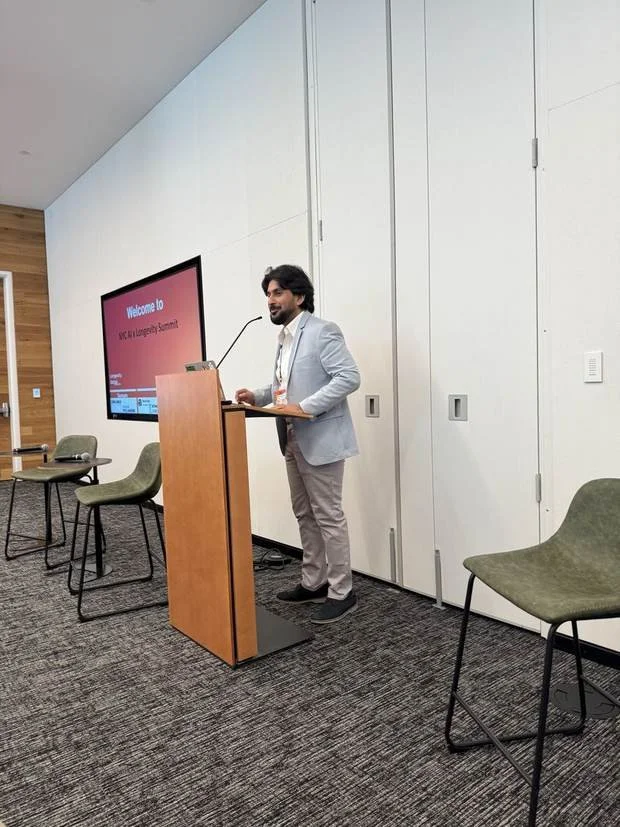
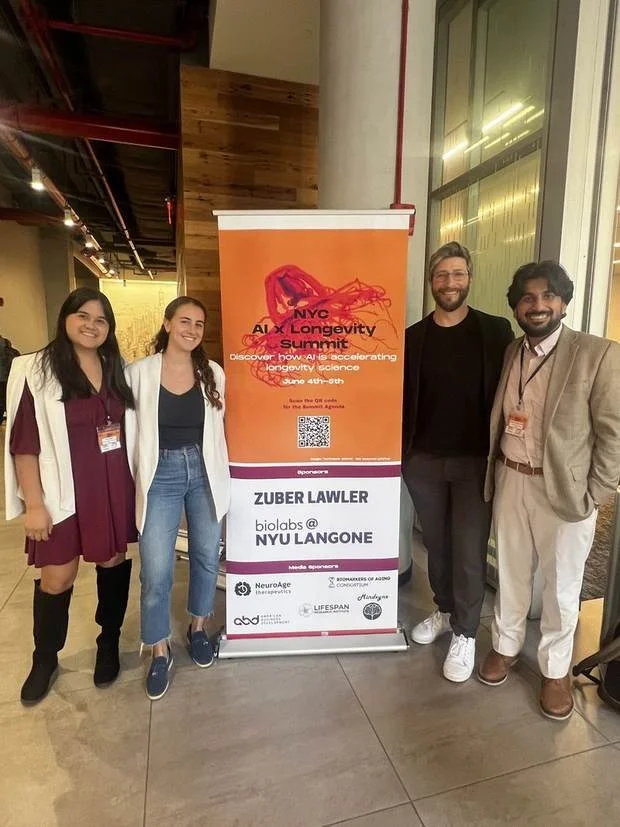
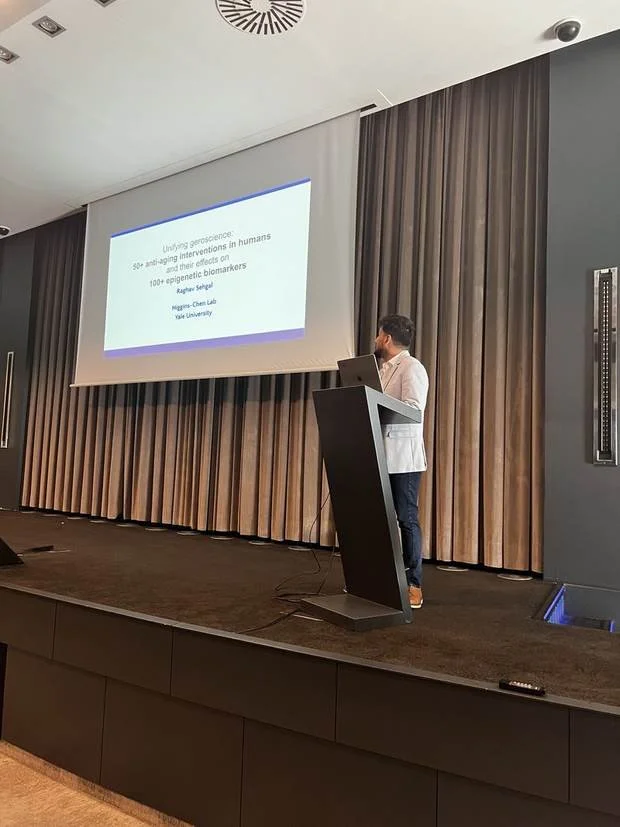
I speak to scientific, clinical and general audiences about how aging is measured and how to judge claims about longevity interventions.
Speaking topics
- AI and aging
What machine learning and foundation models can and cannot tell us about how we age.
- Measuring biological age
How aging clocks work, and why system-specific measures add information.
- Biomarker reliability
Why repeat measurements disagree, and how to tell real change from noise.
- Evaluating longevity interventions
What the evidence from human studies shows, and what a biomarker change does and does not mean.
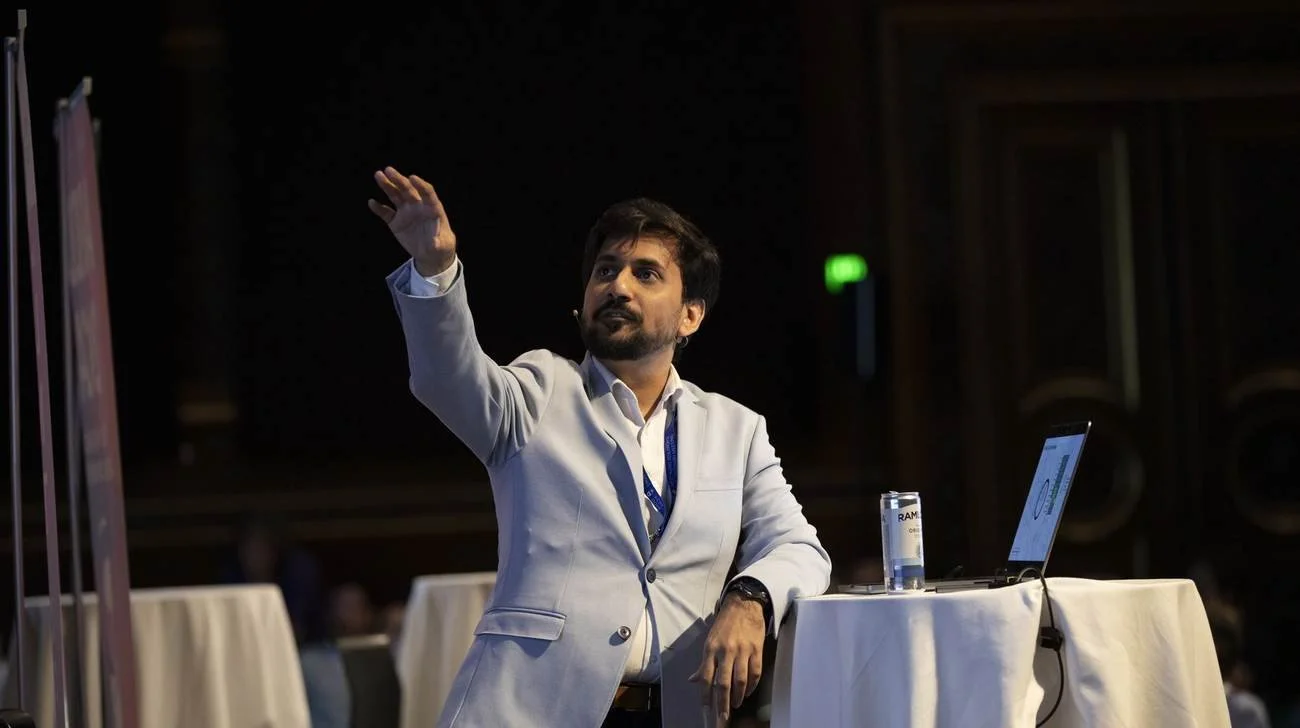
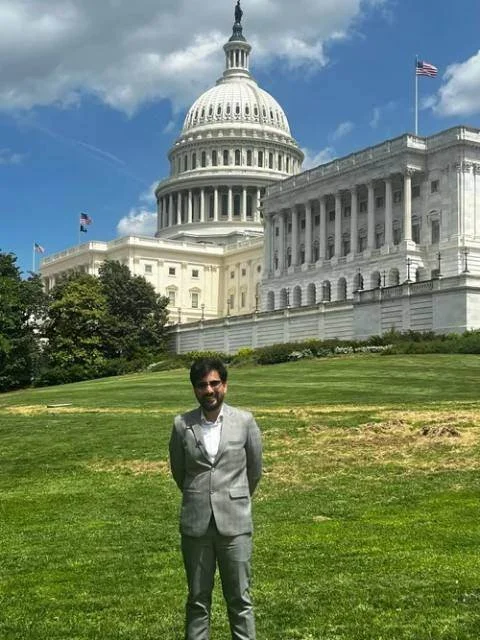
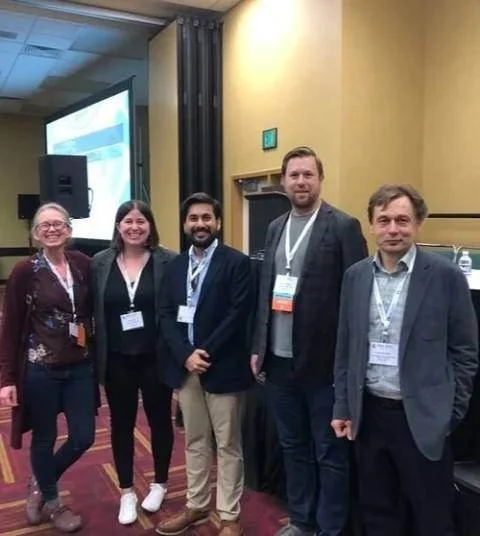
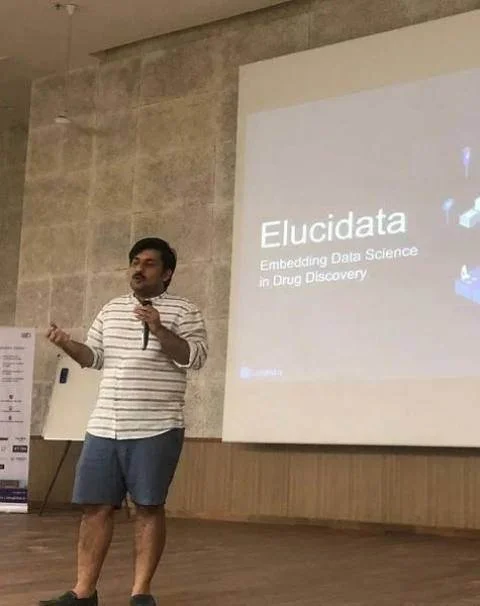
On stage
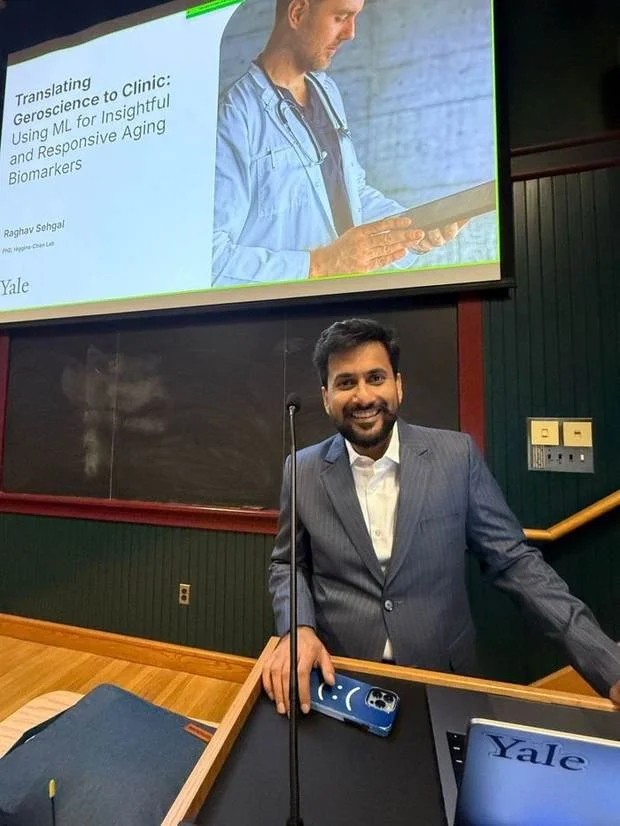
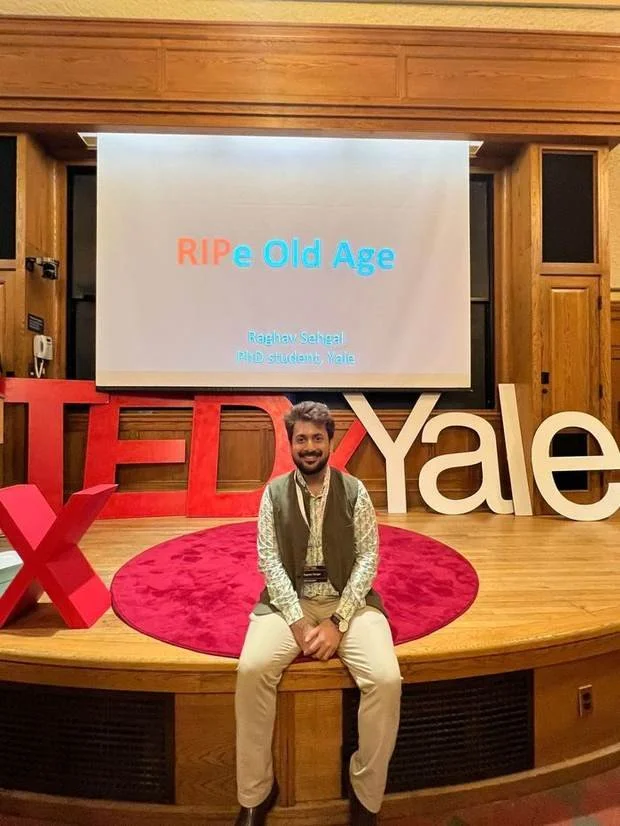
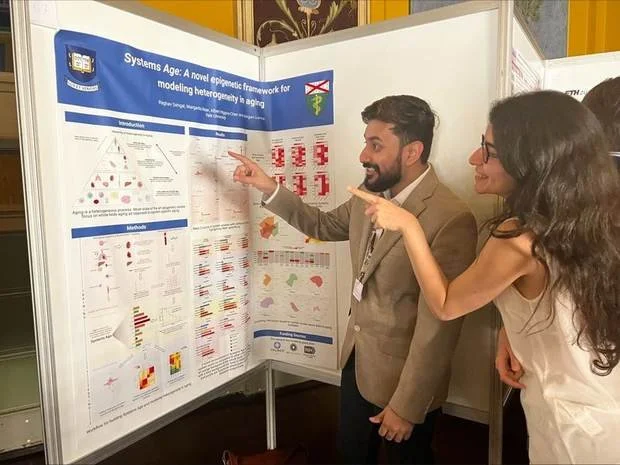
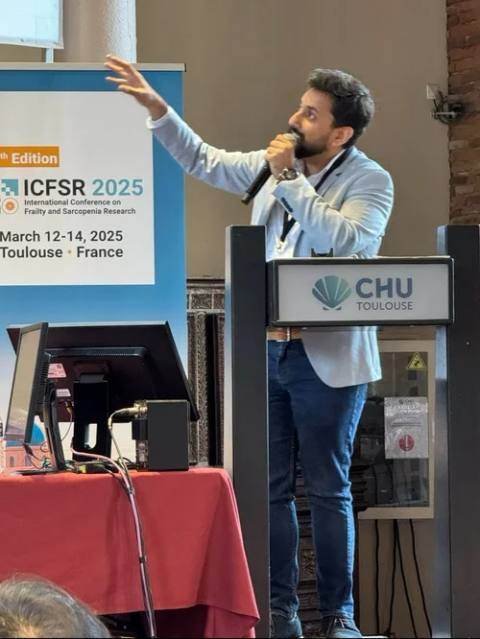

Community
Decoding Longevity
A podcast of long-form conversations with researchers and clinicians working on aging. 35+ episodes.
Recorded talks
Selected coverage
- 2026Yale News on the Nature Medicine intervention study
- 2026SciTechDaily and Medical Xpress on the same study
- 2026AgeTech World interview on AI and healthy ageing
- 2025EMJ on Systems Age
- 2025Longevity.Technology on Forbes 30 Under 30
- 2024Business Insider, HuffPost, The Wall Street Journal
- 2024SYMPHONYAge launch and 51-intervention study announcements
- 2023Lifespan.io on the Systems Age preprint
All coverage and syndication
- Yahoo Life
- AOL
- Business Insider Nederland
- Business Insider India
- DNyuz
- Elite News UK
- PR Newswire · SYMPHONYAge launch
- PR Newswire · 51 interventions
- AP News · 51 interventions
- Benzinga · 51 interventions
- ADVFN · 51 interventions
- ADVFN · SYMPHONYAge
- ProfitQuotes
- Le Lézard
- FOX 40 WICZ
- Your Basin
- WPRI 12
- KRQE 13
- WOWK 13
- WIProud
- KSN 16 Four States
- Tri-State Homepage
- WJHL
- WLNS 6
- InformNNY
- We Are Green Bay
- WRIC 8
- Everything Lubbock
- Count on 2
- WBOY 12
- WVNS 59
- NBC4 Columbus
- WJTV 12
- ABC27
- CBS17
- My Twin Tiers
- KXAN
- FOX31 KDVR
- WTRF 7
- Forbes profile
- Biomarkers of Aging Conference 2024
- Foresight Institute
- The Outpost · CpGPT
- Scientific Frontline
Short biography
Raghav Sehgal, PhD, is Faculty and Principal Investigator at the Marcus Institute of Aging Research, a Harvard Medical School affiliate. He develops AI and biomarkers to understand how we age and to measure whether interventions change that trajectory. He received his PhD in Computational Biology and Bioinformatics from Yale University, where he developed Systems Age, a DNA methylation biomarker of system-specific aging published in Nature Aging and licensed to TruDiagnostic. His analysis of 51 human longevity intervention studies was published in Nature Medicine in 2026, and his work on the reliability of epigenetic clocks in Aging Cell. He was named to the Forbes 30 Under 30 list in 2025 and hosts the Decoding Longevity podcast.
Headshots

Collaborate
The best fits are projects with well-characterized human data, a clear question about aging, and a reason to measure change over time.
Academic collaborations
Cohorts or trials with molecular and clinical data where system-specific aging, biomarker reliability or intervention responsiveness is the question. Methods development in AI for aging biology.
Email about a collaborationIndustry research
Biomarker selection and validation for clinical trials, and analysis of intervention effects on aging biomarkers. Commercial work is handled separately from my academic appointment.
Email about industry researchSpeaking
Conferences, grand rounds, seminars and public events. Please include the date, audience and format.
Send a speaking inquiryProspective trainees
I’m building a new lab and I’m always happy to hear from computational biologists and machine learning people who care about aging. Send me your CV and a few lines about the question that keeps you up at night. I read every email, even if it takes me a little while to reply.
Email as a prospective traineeEmail: raghavsehgal@hsl.harvard.edu